LEE OSKAR 1910-F Harmonica Diatonic 642945100140
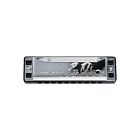
( Brand: Lee Oskar ), ( Manufacturer Part Number: 1910-F ), ( Part Type: Harmonica ), ( UPC: 642945100140 )
Review LEE OSKAR Harmonica Diatonic Major
The 1910-F Harmonica Diatonic 1910 Oskar 642945100140 Lee is a vintage instrument that harks back to the golden era of harmonica manufacturing. This harmonica, modeled after the original 1910 design, boasts a rich and resonant sound that is beloved by musicians worldwide.
Crafted with precision and care, this harmonica features a traditional 10-hole design, with a comfortable and ergonomic plastic comb. The comb is resistant to moisture and warping, ensuring the harmonica maintains its structure and plays smoothly over time.
The reeds on this 1910-F Harmonica are made from high-quality brass, providing a clear and distinct tone. The reeds are tuned to the key of C, making it a versatile instrument that can be used in various genres of music, from blues and folk to country and rock.
The harmonica comes in a sleek black case, which not only protects the instrument but also adds a touch of elegance. The case is compact and lightweight, making it easy to carry around, whether you're on the go or performing on stage.
The 1910-F Harmonica Diatonic 1910 Oskar 642945100140 Lee is more than just a musical instrument. It's a piece of history, a testament to the craftsmanship and artistry of yesteryears. With its rich sound and classic design, this harmonica is a must-have for any serious harmonica player or music enthusiast.
Pros of buying a 1910-F Harmonica Diatonic 1910 Oskar 642945100140 Lee:1. Authenticity: This harmonica is a replica of the original 1910s harmonicas, which are highly sought after by collectors and musicians alike.
2. Tone: The 1910-F Harmonica Diatonic is known for its rich, full sound, making it ideal for a variety of musical styles.
3. Construction: The harmonica is made of brass, which gives it a solid and durable feel.
4. Playability: The harmonica has a simple, easy-to-use design, making it suitable for beginners as well as experienced musicians.
Cons of buying a 1910-F Harmonica Diatonic 1910 Oskar 642945100140 Lee:1. Price: Due to its authenticity and high-quality construction, the 1910-F Harmonica Diatonic can be quite expensive.
2. Maintenance: Brass harmonicas require regular maintenance to keep them in good playing condition, including cleaning and oiling.
3. Availability: Due to its popularity, the 1910-F Harmonica Diatonic can be difficult to find in stock, especially if you are looking for a specific model or finish.
Conclusion:The 1910-F Harmonica Diatonic 1910 Oskar 642945100140 Lee is a high-quality, authentic harmonica that is suitable for musicians of all levels. Its rich, full sound and durable construction make it a great investment, but its price and maintenance requirements may be a turn-off for some potential buyers. If you are willing to invest in a high-quality harmonica and are willing to put in the time and effort to maintain it, the 1910-F Harmonica Diatonic is a great choice.
Recommendation:If you are looking for a high-quality, authentic harmonica and are willing to invest in it, the 1910-F Harmonica Diatonic 1910 Oskar 642945100140 Lee is a great choice. However, if you are looking for a more affordable option or are not willing to put in the time and effort to maintain a brass harmonica, there are other options available that may better suit your needs. It's always a good idea to do your research and try out a few different harmonicas before making a purchase to find the one that is right for you.
Details:
You no longer need to toss out a harmonica because a reed or two has gone south. The design also benefited from Oskar's insights as a seasoned recording and touring pro.
The corrosion proof, stainless steel cover plates are also engineered for excellent projection and tone. Each harmonica box is color coded according to its series and also displays its key prominently. They're more airtight, easier to bend, and better sounding than many harps.
Modular design. The reed plates have wide chambers and narrow dividers for faster, easier playing.
Replacement cover plates are also available.
More keys and modes Lee's innovation didn't stop with a better designed harp. The Dane's design central to Oskar's design is a smooth plastic comb that doesn't swell like traditional wood combs. The former animals singer had been a focal point for war on early hits like spill the wine.
The band's eclectic and fluent mix of genres proved a rich fount leading to a string of '70s and '80s hits, usually with Oskar's distinctive harp riffs providing the signature sound. This was especially true after the departure of vocalist Eric Bordon.
By making affordable replacement reed plates available, Oskar's harps can be easily refurbished. Recognizing the need for harmonicas tuned in other than the major and natural minor diatonic scales, he introduced the melody maker and harmonic minor series that make it easier to play melodies difficult if not impossible to play with a standard diatonic harmonica. Oskar's staccato phrasing and uncanny tone put to great use blowing horn like unison riffs with taxman Charles miller gave war's funky stew of Latino, Caribbean, African, jazz, rock, and r b elements a distinctive lead voice.
About Lee Oskar even if you don't recognize Lee Oskar by name, if you've listened to pop radio much, you've probably heard his highly personal mouth harp on war hits like the Cisco kid, low rider, and why can't we be friends. Replacement reed plates are available for every model in the Lee Oskar harmonica lineup and installation is easy since they mount to the comb with just three self tapping screws. Lee Oskar harmonicas are tuned to 441 plus hertz for a brighter sound.
With equal tuning by octaves, Lee Oskar harps have excellent intonation for blowing highly articulate, single note leads. Well suited for blues, rock, country, folk, and jazz.
The radically different harp design grew out of Lee's frustration with the lack of quality and consistency in the mouth harps of the day. A precision molded, recessed bed holds the reed plate securely to prevent air leakage and project a bigger sound.
Another indication of Oskar's hard won knowledge as a touring pro each harp is clearly marked in bright white on both ends with its first and second position straight and cross harp keys. Built in japan to his exacting standards and incorporating new techniques and materials, it was in 1983 that Lee Oskar introduced his new harmonica. An image to Lee Oskar major diatonic harmonica f condition new designed by a master of the harp.
part #: 642945100140 price
- $56.99
specifications harmonicgee:
- brand: Lee Oskar
- mpn: 1910-f
- part type: Harmonica
- upc: 642945100140
Seller harmonicgee:
- zipcode: 64161
- city: Kansas City, Missouri
Ratings:
- Good to do business with. 01-14-16
- Great transaction 01-14-16
- Great seller! ! Fast shipping! ! 01-14-16
- Arrived timely! Thanks. 01-14-16
- A+++ seller super fast shipper, thanks! 01-14-16
General harmonicgee:
- in stock: Yes
- Musical Instruments & Gear > Wind & wood wind > Folk & World > Harmonicas
- condition: New
Returns harmonicgee:
- policy: no returns
Offer harmonicgee:
- best offer: false
- # bids: 0
- Started: January 14, 2016, 11:23 pm
- # Sold: 0
- quantity: 1
Shipping harmonicgee:
- cost: $0.0
- type: Flat
- handling: 1 days
Payments harmonicgee:
- PayPal
Lee Oskar 1910-F Is Similar To:
- 0642845100035 Lee Oskar C Harmonica (50.5% similar) Lee Oskar c harmonica - refurbished...(October 24th, 2017)
- 0642945100010 Lee Oskar A Major (43.7% similar) Lee Oskar a major used harmonica cleaned and serviced, works like new, box does not close anymore...(October 25th, 2017)
- 0642945100034 Hohner Lee Oskar Major Diatonic Harmonica New Damaged (65% similar) Lee Oskar major diatonic harmonica c new damaged box. Priestlier e-commerce solutions...(July 26th, 2018)
- 0642945100041 Lee Oskar Major Refurbished Harmonica In All Keys (55.5% similar) Lee Oskar major refurbished lee refurbished harmonica priestlier e-commerce solutions...(July 27th, 2018)
- 0642945100119 Lee Oskar Bb Major Used Harmonica In All (58.2% similar) Lee Oskar BB major used lee used sign of wear and tear on the bottom cover great condition priestlier e-commerce solutions...(July 27th, 2018)
- 1310 Tombo Lee Oskar Harmonica By In Case Major Diatonic (50% similar) 95COMES in original case with paperwork's like-new condition. Lee Oskar harmonica by tomboy in case c major diatonic list price 34...(August 13th, 2018)
- 1910-7p Lee Oskar By Tombo (48.8% similar) All 7 harmonicas are used please view pictures closely as they part of...(February 2nd, 2018)
- 1910-acd Lee Oskar Blues Rock (44.7% similar) The bands eclectic and fluent mix of genres proved a rich fount leading to string '70S '80S hits, usually with Oskar distinctive harp riffs providing signature sound. Sanitation fee. Central to Oskar design is a smooth plastic comb that doesn't swell like traditional wood combs. By making affordable...(February 9th, 2018)
- 1910-hig Lee Oskar Major Diatonic Harmonica Key Of High (75.7% similar) In his late teens, Oskar traveled to America, where he formed the popular funk band war. Several other manufacturers, using various names stamped on their cover plates, for marketing purposes, have the exact same notation layout as a Lee Oskar major diatonic harmonica. The major diatonic harmonica ...(May 25th, 2018)
- 1910-le Lee Oskar Major Diatonic Harmonica Key Of Low 642945102021 (85.2% similar) 1ST position straight harp, is still used by many players today, but due to its simplicity of sound, it not as popular 2ND cross. The evolution of music introduced blues, rock and country along with these new forms came need for greater expression. Harmonica players began to experiment and found ...(November 21st, 2018)
- 1910-lf Lee Oskar Major Diatonic (70.5% similar) In good condition...(January 26th, 2018)